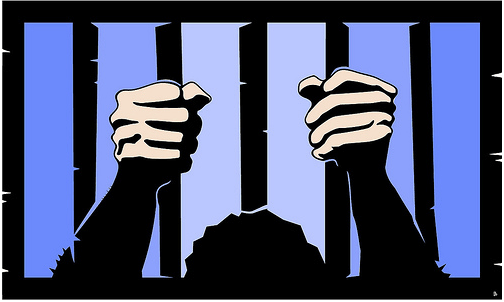
PRISON (OUT) BREAK: RIGHTS OF THE PRISONERS DURING A PANDEMIC

“It is said that no one truly knows a nation until one has been inside its jails. A nation should not be judged by how it treats its highest citizens, but its lowest ones,” – Nelson Mandela

The COVID-19 pandemic has tossed life out of apparatus for everyone in manners that none of us would ever have expected. The disarray, the difficulties arising on a day by day, maybe even on an hourly, premise has been hard to wrestle with. Amidst everything, there is a populace that even in the best of times, gets the least consideration—people in detainment facilities and a few other organizations. Indian prisons inside the absence of continued lack of foresight, the slow-moving mechanism of the judiciary, and many other such motives stay not the most effective capability hubs for the mass outbreak of COVID-19 but also a whole mockery of the idea of social distancing.. The jail framework in the nation needs a huge update at its underlying foundations to shield its jail populace from another emergency later on.

KEYWORDS– Prisoners, Social Distancing, Mental health, ICCPR, The Model Prison Manual, 2016.

SOCIAL DISTANCING IS A MYTH IN PRISONS

Social distancing suggests that staying a minimum of six feet from people, not gathering in teams, and staying out of packed places. This is impractical for the incarcerated population in prisons. The agencies reside in establishments wherever prisoners live, work, eat, sleep, and even bathe in communal settings. The main reason for overcrowding is the large number of undertrials waiting for their cases to be disposed of. India’s prisons have an average 114 percent occupancy rate, with the under-trials- constituting nearly 68 percent of the prison population.

Prisons are usually overcrowded and have inmates and workers returning and going. The daily routine creates surroundings ripe for the unfold of infectious diseases. Overcrowding is especially a major concern in big cities. Mumbai’s Arthur Road prison remains packed nearly 3 times the official capacity of 900. Thus, it is vital to analyze the rights of the prisoners locked up in prisons exceeding their capacities throughout the period and breadth of India within the face of a disorder to which Social Distancing is one of the crucial solutions at the moment.

ABSENCE OF FOCUS ON MENTAL HEALTH

Access to mental health resources is much difficult to the vulnerable population such as migrant laborers, pregnant women, and refugees where the need is much higher than the general population. One such vulnerable population is the prisoners in the Indian prisons. As opposed to the general conviction, the detainees structure a heterogeneous gathering and originate from the various social and financially disadvantageous foundation. They are bound in penitentiaries for long and brief terms separated from the individuals who get life imprisonment. With the absence of fundamental comforts, restricted space, congestion of detainees, absence of a solid way of life, and nonattendance or constrained accessibility medicinal services benefits, the penitentiaries can incline the detainees to different physical and mental issues. In this situation, detainees with psychological well-being issues may think that its hard to approach and get emotional wellness administrations, assuming any.

Reports propose that even in ordinary occasions emotional well-being of the detainees stays frail in jails. Amid pandemic, things will turn out to be more regrettable. This is because hearings before various legal discussions have been essentially decreased and groups of detainees have been approached to shun meeting the prisoners. Prison specialists have likewise diminished the development of detainees and have dropped every single social movement along these lines secluding detainees in correctional facilities. Albeit, this the necessity of great importance, this makes detainees increasingly powerless against emotional well-being messes. 

Rule 15.03 of Model Prison Manual, 2016 accommodates protecting the emotional well-being of detainees and has arrangements for masterminding mental assistance for the individuals who need it. Likewise, Section 103(6) of the Mental Healthcare Act, 2017 requires each State government to set up a psychological wellness foundation in the clinical wing of in any event one jail in each State and Union region. In any case, these arrangements have regularly been overlooked. In pre-COVID times, there were occurrences where the arrangement was either not followed or the specialists were understaffed to manage the high volume of detainees who were experiencing psychological well-being messes. There is a critical requirement for exacting execution of the equivalent during the hour of the pandemic.

STATE’S OBLIGATIONS TOWARDS THE  PRISONERS 

The privilege of wellbeing isn’t expressively a crucial right accommodated in the Constitution of India.In any case, according to the judgment of the Supreme Court of India in Paschim Bangal Khet Mazdoor Samity and Others v. Province of West Bengal and Others, the privilege to human services offices shapes a fundamental piece of the privilege to life under Article 21 of the Constitution of India. 

Presently it is nevertheless basic to investigate whether the central right to wellbeing is accessible to a detainee all things considered to the residents of the nation. The Supreme Court of India in Charles Sobhraj v. The Superintendent, Central Jail, Tehar, New Delhi, held that detainment doesn’t “spell goodbye to the fundamental rights.” Thus, all key rights accessible to customary residents are likewise accessible to detainees, though with certain limitations in their activity because of detainment of the last mentioned. The Court explicitly held that not giving legitimate medicinal services offices to prisoners would prompt an infringement of their fundamental rights, in this manner pulling in the cure of the courts. 

Aside from the Indian Constitution, Section 4 of the Prisons Act, 1894, accommodates the arrangement of clean convenience offices to detainees. Simultaneously, Section 7 of a similar enactment thinks about the arrangement of asylum and safe guardianship offices to such detainees who might be seen as in an abundance of the jail limit of a jail. Under the Prisons Act, a prisoner essentially must be checked by a clinical specialist at the hour of entrance into the jail.

THE RIGHTS OF PRISONERS DURING THE PANDEMIC UNDER INTERNATIONAL LAW AND INDIA’S RELATED OBLIGATIONS 

The United Nations Human Rights Committee in its concluding observations on Moldova has  commented that the disappointment of a state in making positive strides towards the avoidance of the spread of novel coronavirus in jail would add up to an infringement of Article 6 (right to life) and Article 9 (right to freedom) of the International Convention on Civil and Political Rights, 1996 (ICCPR).

 India is one of those countries which have endorsed the ICCPR. In this manner, there are commitments on the Indian Government with regards to making strides towards forestalling the spread of COVID-19 in penitentiaries, and any such disappointment will prompt infringement of the previously mentioned commitments under the ICCPR.

The Model Prison Manual, 2016 mulls overbroad rules for jails if there should arise an occurrence of pestilences. In instances of there being an epidemic breakout, the Prison Manual considers changeless isolation sheds for each tainted detainee, congestion to be maintained a strategic distance from in seclusion wards and cells additionally the treatment of patient’s dress and contaminated infected quarters.

STEPS TAKEN BY VARIOUS AUTHORITIES

On 16th March, the Supreme Court asked the states and Union territories on their plans to avoid COVID-19 unfold in prisons. At the time, most states showed their temperament to unleash bound classes of prisoners on bail and parole. the concept was to decongest the one,401 prisons within the country, which, consistent with 2018 National Crime Records Bureau (NCRB) information, were packed with around 450,000 people, nearly 60,000 over the sanctioned capability.

On the direction of the Supreme Court, the states and Union territories had set up a high-powered committee (HPC) to decongest prisons in March. The committees came up with guidelines on the 14 categories of prisoners to be released. The courts have taken a place that those captured in financial, fear-related, and sorted out wrongdoing and under-identification act have been prohibited. The blamed charged under Unlawful Activities (Prevention) Act (UAPA) or the individuals who fall under “organized” wrongdoing offenses are rejected. The apex court also recommended that one potential reason for choosing to discharge detainees on a brief premise was the place the most extreme discipline for the offense the individual was accused/indicted for, is seven years or less detainment.

A STATISTICAL REVELATION

Delhi and some states like Karnataka and Chhattisgarh set the seal on realizing a large number of convicts. large numbers should be released. Jharkhand and Rajasthan decided to move prisoners to less crowded jails. Nonetheless, some HPCs didn’t take proactive stands. In Maharashtra, for example, it said only those sentenced to less than seven years could be released. Belatedly on 11 May, they widened the category of prisoners who shall be released. By mid-June, 36 temporary jails were built across 27 districts of Maharashtra to deal with “high risk” inmates also as function quarantine facilities for brand spanking new inmates till they could be shifted to Taloja Central Jail.

However, the major challenge for prisons is the influx of new inmates, who could bring in infection from outside and overcrowding remains an unsolved issue. Take, for instance, the information identified with Karnataka. While it has been referenced that 1,198 prisoners have been discharged from different penitentiaries over the state either on bail or parole from 23rd of March (introductory days of the lockdown) till 19th April, well into the lockdown, the net change in the jail populace has been just 659 prisoners. Although 1,198 detainees may have been discharged, 539 individuals have entered the jails over the states during a similar timespan, demonstrating that the decongestion practice has demonstrated to be vain.

CONCLUSION AND SUGGESTIONS

William Blake has said, “Prisons are built with stones of Law”. Therefore, when human rights are harassed behind the bars, constitutional justice comes forward to uphold the law. The pandemic makes an enormous difference. Inmates are presently not subject just to lost freedom. Their lives are put in peril. It seems as if individuals have had their old sentences tore up and new ones passed on. Notwithstanding regardless of the courts and movement councils concluded they were expected, they’re presently presented to the virus also.

The 1983 report of the A.N. Mulla Committee on Prison Reforms suggested building up independent detainment facilities for under-trial prisoners, snappy preliminaries and the giving of bail to an under preliminary during the procedure of the preliminary except if it could be demonstrated by the arraignment that conceding of the bail could jeopardize the procedure of equity and the security of the general public. The proposals of the Committee as for giving bail to an under preliminary can be received right now to forestall new undertrials reserved for unimportant offenses from being sent to the jails and adding to the previously overflowing number of undertrials present secured our detainment facilities. Different proposals of the Committee, as expressed above, likewise should be step by step and viably actualized over a while to prepare our detainment facilities to confront a pandemic of this extent in the far off future. 

 After the pandemic is over, the Indian government must ensure that proper facilities are being provided and the jails are created according to humanitarian measures. The high pervasiveness of mental issues in detainees and the requirement for appropriate psychological well-being administrations in penitentiaries. Alteration of the jail condition that supports positive psychological wellness among the detainees could help in the counteraction and early recuperation from emotional well-being messes. The State also needs to recognize those prisoners who experience the ill effects of emotional well-being messes. The subsequent stage is increment the social association of detainees utilizing e-media. One such exertion is found in detainment facilities situated in Punjab and Rajasthan through the E-Mulaqatprogramme, wherein prisoners can converse with their families on a video call.

Am I proposing that everyone needs to be discharged? No. We despite everything got to gauge the objectives of imprisonment against the expenses. Yet, how we make that estimation must change. Prisoners should now be discharged, beginning with the individuals who represent a minimal danger to society or the foremost defenseless against the infection. Given the pandemic, this is the time when a change can happen. Justice requires we improve.
SUICIDE- FROM A LEGAL PROSPECTIVE AND IT’S LEGAL REPERCUSSIONS

ABSTRACT

 “All fled–all done, so lift me on the pyre; 

The feast is over, and the lamps expire.”

The above lines were a part of Robert E. Howard who was a well-renowned writer, a farewell letter to the planet before he committed suicide. it’s in these lines that one gets thought about the state of mind of an individual close to committing such an act of self-destruction and what he/she goes through. Further on during this article, Robert E. Howard’s death note will make us aware of what most of our society has been ignorant about for an extended time.

KEY WORDS–  Suicide, Attempt to commit suicide, Section 309 IPC, MHCA

INTRODUCTION

The word “Suicide” literally means, “To kill oneself” (Sui-of oneself and Caedre – To kill). In 1968, the World Health Organization defined the suicidal act as “the injury with varying degrees of lethal intent” and suicide is defined as “a suicidal act with the fatal outcome”. Nearly 800000 people die due to suicide every year, which is one person every 40 seconds.  Attempted suicide is a failed attempt to take one’s life. Assisted suicide is defined as an individual helping another individual in bringing about their own death by providing them with the means to carry it out or by provoking on how to do it. This article will be focusing on the attempt to suicide which is punishable under section 309 of Indian Penal Code, 1860. (Herein referred as IPC). Tons of conflicting views have brought forth on the desirability of retaining or deleting Section 309 of IPC.

SECTION 309 OF IPC,1860

The section states – Attempt to commit suicide: 

 “Whoever attempts to commit suicide and does any act towards the commission of such offence shall be punished with simple imprisonment for a term which may extend to one year or with fine, or with both.

From an elementary studying of this section, it can be inferred that the attempt must be intentional. The main element of suicide is an intentional self-destruction of life. Thus, if a citizen is at some stage in a nation of intoxication, he is taking an overdose of poison through mistake he is not guilty under this section. The section relies on the basis that the lives of men aren’t best treasured to them but additionally to the country which safeguards them. 

The life of Section 309 became considered an anachronism dishonourable of human civilization within the 21st century. Attempt to suicide can be regarded more as a signal of a diseased situation of mind deserving treatment and care in place of an offense to be visited with punishment. Criminalizing suicide is a form of condemnation instead of how of helping people deal with the underlying psychological state problems that lead them to aim to require their lives.

ARTICLE 21 OF THE CONSTITUTION 

The Constitution of India is the supreme law of the land. It provides an extended index of fundamental rights under Part-III. Article 21 of our Constitution is one of the important fundamental rights among those rights.

Article 21 – Protection of Life and Personal Liberty: 

No person shall be deprived of his life or personal liberty except according to procedure established by law.”

The right to life is a phrase that is described in this article. It defines that the belief that a citizen has a crucial right to live which suggests steering a meaningful and dignified life. A very captivating development in the Indian jurisprudence is that the extended proposition given to Article 21 by the Supreme Court in the post-Maneka era. Since then, Article 21 has proved to be multi-dimensional.

Thus, Liberty is guaranteed to every individual but no such right is explicitly given to end his life on his own will. On this issue the stance taken by the judiciary is indisputable. The main question that arises is whether the right to life includes the right to die.

LANDMARK JUDGEMENTS

In India, the case laws relating to attempt to commit suicide have intersected on the issue of ‘right to die’ and this does not only question the morality but also the constitutionality of section 309 of IPC. 

  1. In a landmark judgment delivered by the Apex Court in P. Rathinam vs. Union of India, the court held that Section 309,IPC is “cruel”and “ irrational”. It implied that it violates Article 21, and it should be removed to humanise penal codes. Further the honourable Supreme Court rendered that suicide or attempt to commit it causes no harm to others, due to which state’s interference with a personal liberty of the concerned person is named for.
  1. Inspite this insightful observation by the Supreme Court, the decision was overruled in Gian Kaur v. State of Punjab. Extermination of life is not included in protection of life. It further stated that right to life guaranteed under Article 21 of the Constitution did not include the ‘right to die’ or ‘right to be killed’ and thus an attempt to commit suicide under section 309, IPC or even abetment of suicide under section 306, IPC, are well within the constitutional mandated, and aren’t void or ultra vires.
  1. The discussion between euthanasia which means withdrawal of life support for terminally ill patients came to public eye in 2000, with the case Thomas Master v. Union of India. The Kerala High Court held that no distinction is often made between suicide and the right to voluntarily put an end to one’s life. Voluntary termination of one’s life for whatever reason would amount to suicide within the meaning of Sections 306 and 309, IPC. There can be no distinction between suicide committed by an individual who is either frustrated or defeated in life and that by a person like the petitioner.The question of whether suicide was committed impulsively or whether it was committed after elongated deliberation is irrelevant. 

ATTEMPTS MADE TO REPEAL SECTION 309,IPC

In 1971, the Law Commission in its 42nd Report recommended the repeal of Section 309 IPC. The IPC (Amendment) Bill, 1978, was even passed by Rajya Sabha, but before it could be passed by Lok Sabha, Parliament was dissolved, and the Bill lapsed.

The 18th Law Commission in its 210th Report titled ‘Humanization and Decriminalization of Attempt to Suicide’ submitted on October 17, 2008, said that any attempt to suicide needed medical and psychiatric care, and not punishment. In March 2011, the Supreme Court also recommended to Parliament that it should consider deleting the section. The matter did not, however, reach its conclusion.

MHCA,2017

The Mental Healthcare Act (MHCA) 2017 was enforced on May 29, 2018. This is often “an Act to provide for mental healthcare and services for persons with mental illness (who have a substantial disorder and whose functioning is grossly impaired) and to protect, promote and fulfill the rights of such mentally ill persons, during delivery of mental healthcare services and for matters connected therewith or incidental thereto.”  It’s crucial to spotlight the very fact that in 2016 the words “mental illness” were replaced by “severe stress,” by the Indian Parliament.

Section 115 of MHCA states:

“Notwithstanding anything contained in Section 309 of the IPC, any person who attempts to die by suicide shall be presumed, unless proved otherwise, to have severe stress and shall not be tried and punished under the said Code.”

Section 309 of IPC, which deals with those that plan to die by suicide, wasn’t only unsatisfactory but also discriminatory. If an individual failed within the plan to die, inflicting torture and degradation by punishment would be unreasonable and unjust. In fact, such persons deserve compassionate and sympathetic treatment. Therefore, a suicide attempt is decriminalized by Section 115 of MHCA 2017, superseding Section 309 of IPC.

CONCLUSION

Suicide may be a legal anomaly wherein an attempted act is punishable while an accomplished act is not! The choice to repeal Section 309 shouldn’t be treated as a license to die, but as a chance for everybody around to support and look after those in distress; the social responsibility to stop suicides, and protect our citizens. At an equivalent time, steps must be taken to make sure that this doesn’t promote suicide-bombers, hunger strikes, or the other kind of protests that seek to exert unreasonable pressure on the state to be flexible on demands. The author would really like to worry that albeit Section 309 is revoked the state must make sure that there are ample legislations and procedures to report all kinds of suicide attempts. Above all, it’s necessary to teach and make awareness among the general public at large to achieve the objectives and therefore the purpose of enactment of the MHCA 2017 concerning suicide and plan to die by suicide.

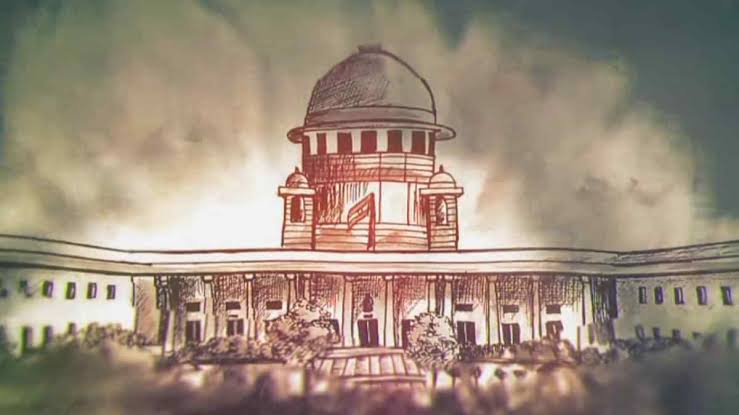
SUPREME COURT AND COVID’19: STAYING SILENT IS NOT AN OPTION

Introduction

‘How can we stop migrants from working’ one of the judges on the bench commented as the Supreme Court on May 15 2020, declined to entertain an application to identify impotent migrant workers, take care of their needs and provide free transport to them. As a budding lawyer, the question seemed quite uncourageous on the face of the Supreme Court being the apex chamber of our country. India is suffering because it chose staginess over governance in dealing with the global pandemic. 

Closely examining the seriousness of the current situation, we see the country tussling in various aspects but the most horrifying aspect is that of the migrant workers in India. The Supreme Court which is supposed to protect the rights of the citizens have failed to do so. This not only questions the various tires of the judicial system but it jogs one’s attention directly to the search engine of the Indian Constitution. Dr. B R Ambedkar considered Article 32 as one of the most important institutional provisions- which allows the citizens to approach the Supreme Court against violation of their fundamental rights. But now the judges are missing upon this fact.

History of the Supreme Court

The Supreme Court serves both as the final court of appeals and the final interpreter of the Constitution. It is often regarded as the most progressive judicial bodies across the globe. Even though the entire country is in lockdown, judgments have been delivered in a total of 325 cases which include 268 connected matters. The quick adaption to the new virtual system is applauded by each law-abiding citizen of India. The Puttaswamy judgment which Made the right to privacy a fundamental right. Navtej Singh Johar v. Union of India which decriminalized homosexuality. In light of the above, it can be said that the Supreme Court over these years has largely governed by its endeavor to ensure that justice is done. The court has stood by its name but this did not happen overnight. After receiving a lot of criticism from the infamous ADM Jabalpur judgment. The Supreme Court has restored the faith of the people and has made them realized that the honest parties are not the ultimate sufferers and that the guilty are ultimately punished.

The fate of the petitions: Delayed and then dropped

The problem of migrant workers might not be unique to India, but some frightening incidents have shone a spotlight on the plight of millions of poor Indians- and how the lockdown has stranded them far away from home. We wake up every day to several disheartening pictures where the migrant workers are sleeping on roads and seem depressed. Over 120 of them have dies along their way. While the center set up a massive mission titled ‘ Vande Bharat’ to bring back the Indians marooned overseas. But it has not shown the same enthusiasm towards the migrant workers. Instead, it added more pressure and blame on the states.

In another writ petition which sought directions to help migrants get home, the Supreme Court initially called on the Centre to explain the steps it was taking for allowing movement of migrant workers to their hometowns. In the subsequent hearing, despite the petitioners throwing light on how the migrants were being forced to pay for their tickets still, the government’s law officer having no response on who was bearing the travel fate, the court disposed of the Petition on the ground that its jurisdiction was limited under Article 32 and that the main relief sought for had been considerably fulfilled.

How can questions with such a heartfelt effect on the delivery of justice be summarily dismissed as an internal matter? It is the constitutional right of every citizen to approach the courts especially the Supreme Court to enforce their rights. Therefore, it cannot be claimed that citizens do not have the right to know how decisions that affect justice are made.

A lesson from the past

During the 1975-77 emergency, approximately 1,00,000 people were detained under the detention law.10 high courts said that even when emergency rights were suspended, habeas corpus appeals were filed before the courts. and they repealed several orders for banned detention. It is regrettable that the Supreme Court bench reversed those decisions and stated that in an emergency even their applications for Habeas Corpus cannot be tolerated. Justice Khanna gave his famous dissent, though that led to his reinstatement as Chief Justice otherwise guaranteed him a permanent place in the history of justice. He reminded the court in the honor of Lord Atkins’ famous defense of the same issue that emerged in England during World War II, in Liversidge v Anderson, that they “acknowledge the conflict of arms that the rules are inflexible” and that the court’s action may approve. in an emergency, anvil should be tested for constitutional and human rights.

The odd conduct of the Supreme Court during the crisis was profoundly baffling. The sort of giving up of the Supreme Court that we are encountering today because of the COVID-19 emergency (even without an affirmation of crisis) is maybe considerably progressively genuine when the court isn’t set up to address practically whatever the administration has done or not done regardless of the grave encroachment of central rights that have followed.

High Courts dip a toe in

With the Centre ‘abdicating responsibilities’, the state governments were left within the lurch. Various High Courts have considered the seriousness of this issue and stood up to require all the responsibilities. The migrant worker crises were marked by empathy for his or her plight. Last month, the Himachal Pradesh High Court ordered the state government to file an action taken report on the steps taken to address the challenges being faced by migrant laborers. This order referred to an order passed by the Jammu and Kashmir High Court in March, directing the UT administrations of Jammu and Kashmir and Ladakh to ensure that “accommodation, healthcare and the needs of the migrant laborers, if not already provided for, are addressed”. The Karnataka judicature on May 12 ordered the governments to make your mind up on paying the transportation cost of the workers going back to their villages and city. province judicature while hearing a PIL said that ignoring the plight of the migrant workers will amount to the disrepair of duty and that we should act as a protector of the poor. Gujarat judicature has taken suo moto cognizance since many of them are dying of hunger. The Delhi judicature directed the Arvind Kejriwal government to make sure that there is an uninterrupted working of the helpline numbers founded to enable the return of migrant workers to their native place. In light of those shortcomings, various judicature directed the govt. to form awareness about the trains plying, to produce assurance and a schedule to the migrants who had registered to travel back to their home.

Conclusion

India is experiencing the worst large scale pandemic and that we don’t have any reliable data to inform us when the pandemic will end. The lockdown was necessary and nobody is blamed for the identical. But as a democratic country we should always raise our concern regarding the recent wireless silence attitude of the Supreme Court. Corona may be a rousing demand for all Indian Courts especially the Supreme Court. It’s a golden opportunity for the judiciary to persuade the hearts of the people by taking proactive steps. in step with the Supreme Court lawyer Dushyant Dave, “I do believe that the judiciary’s prime responsibility is adjudication, which is becoming longer, and so, more painful. The judiciary should target adjudication and not stray into the chief or legislative field.” The Supreme Court, incorrectly presenting itself as having to decide on between complete restraint or absorbing the Executive’s role, is falling far wanting the expectations that not only the Constituent Assembly but every citizen had from it. If the judiciary’s conscience is dead the lawyers must awaken the conscience.

Design a site like this with WordPress.com
Get started